
Description - engine management (ENGINE MANAGEMENT SYSTEM - V8) (page 17 of 43)
- Make
- Land Rover
- Model
- Discovery II (NAS)
- Section
- DESCRIPTION AND OPERATION
ENGINE MANAGEMENT SYSTEM - V8
18-2-22 DESCRIPTION AND OPERATION
Input/Output
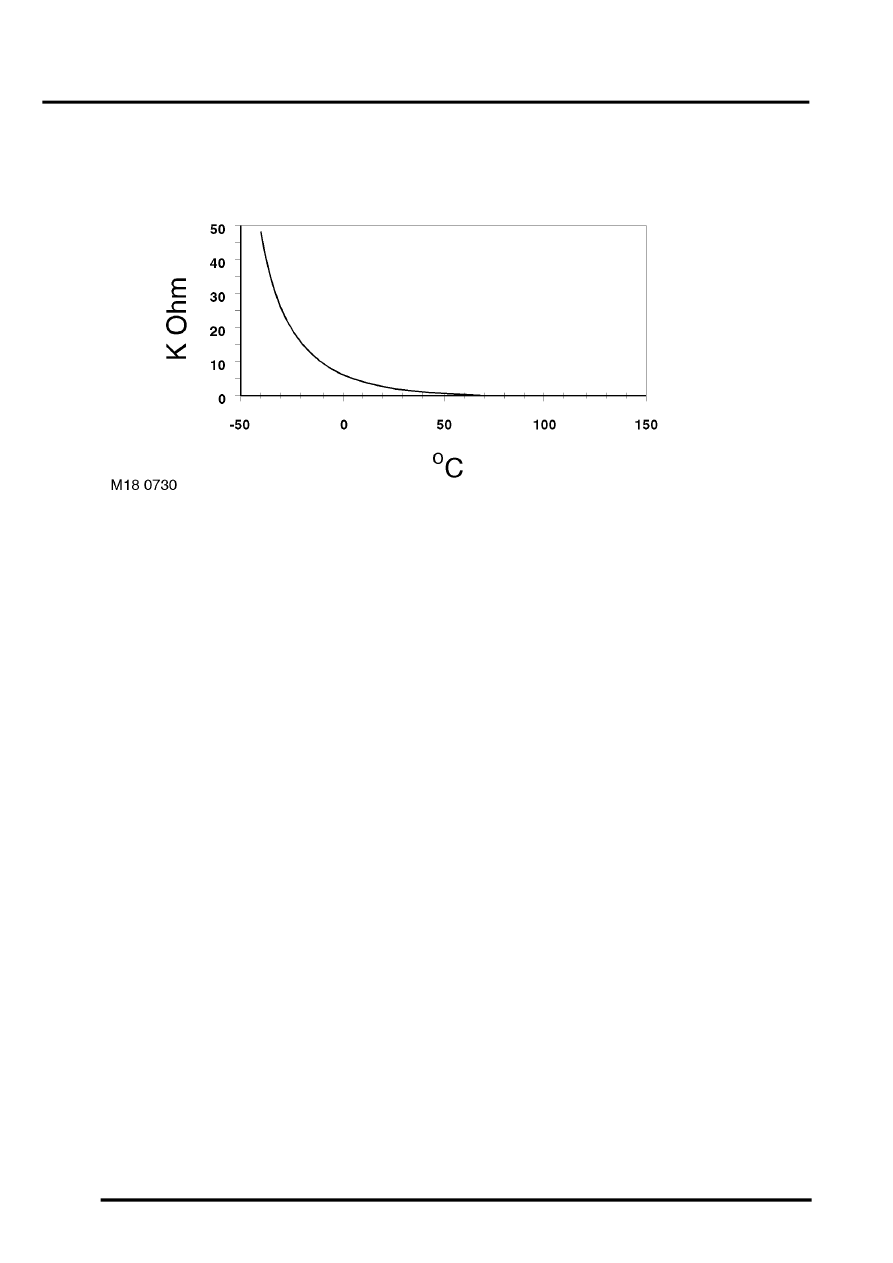
The ECM provides the thermostat monitoring sensor with a 5 volt reference via pin 21 of connector C0635 of the ECM,
and an earth via pin 5 of connector C0635 of the ECM.
There are three types of thermostat monitoring sensor diagnostic checks:
l
Sensor signal is above maximum threshold. For the ECM to register this as a fault, and illuminate the MIL, the
temperature registered by the thermostat monitoring sensor must be above 140
°
C (284
°
F) for more than 1
second.
l
Sensor signal is below minimum threshold. For the ECM to register this as a fault, and illuminate the MIL, the
temperature registered by the thermostat monitoring sensor must be below -33
°
C (-27
°
F) for more than 1
second, while the inlet air temperature reading is greater than -32
°
C (-25
°
F).
l
Signal difference between ECT sensor and thermostat monitoring sensor is below maximum threshold. For the
ECM to register this as a fault, and illuminate the MIL, the following conditions must exist:
l
No maximum or minimum threshold signal faults exist.
l
No faults are recorded against the thermostat monitoring sensor or vehicle speed signal.
l
Engine not in idle speed control.
l
Fuel cut-off not active.
l
Engine speed is greater than 400 rpm.
l
Road speed is greater than 0 mph.
l
Integrated mass air flow from engine start to fuel cut-off is greater than set value (between 3 kg and 10 kg
dependent upon engine coolant temperature at engine start).
l
Engine coolant temperature at engine start is between 9
°
C and 39
°
C (48
°
F and 102
°
F).
l
High range is selected.
l
Delay time before thermostat monitoring is enabled is between set limits (between 50 and 500 seconds
dependent upon engine coolant temperature at engine start).
l
Engine coolant temperature is greater than 90
°
C (194
°
F).
l
The difference between the ECT sensor reading and the thermostat monitoring sensor reading is less than
39
°
C (102
°
F).
Parts & tools for this job Staging For Land Rover Discovery
- PARTEngine gasket setSearch: Land Rover Discovery engine gasket set
- TOOLTorque wrenchSearch: 3/8 inch torque wrench
- TOOLFeeler gauge setSearch: feeler gauge set
Links open Amazon search results in a new tab. As an Amazon Associate I earn from qualifying purchases.