
EMISSION CONTROL - BMW DIESEL (17 - EMISSION CONTROL) (page 2 of 4)
- Make
- Land Rover
- Model
- Range Rover P38
- Section
- DESCRIPTION AND OPERATION
17
EMISSION CONTROL
NEW RANGE ROVER
2
DESCRIPTION AND OPERATION
Exhaust Gas Recirculation (EGR)
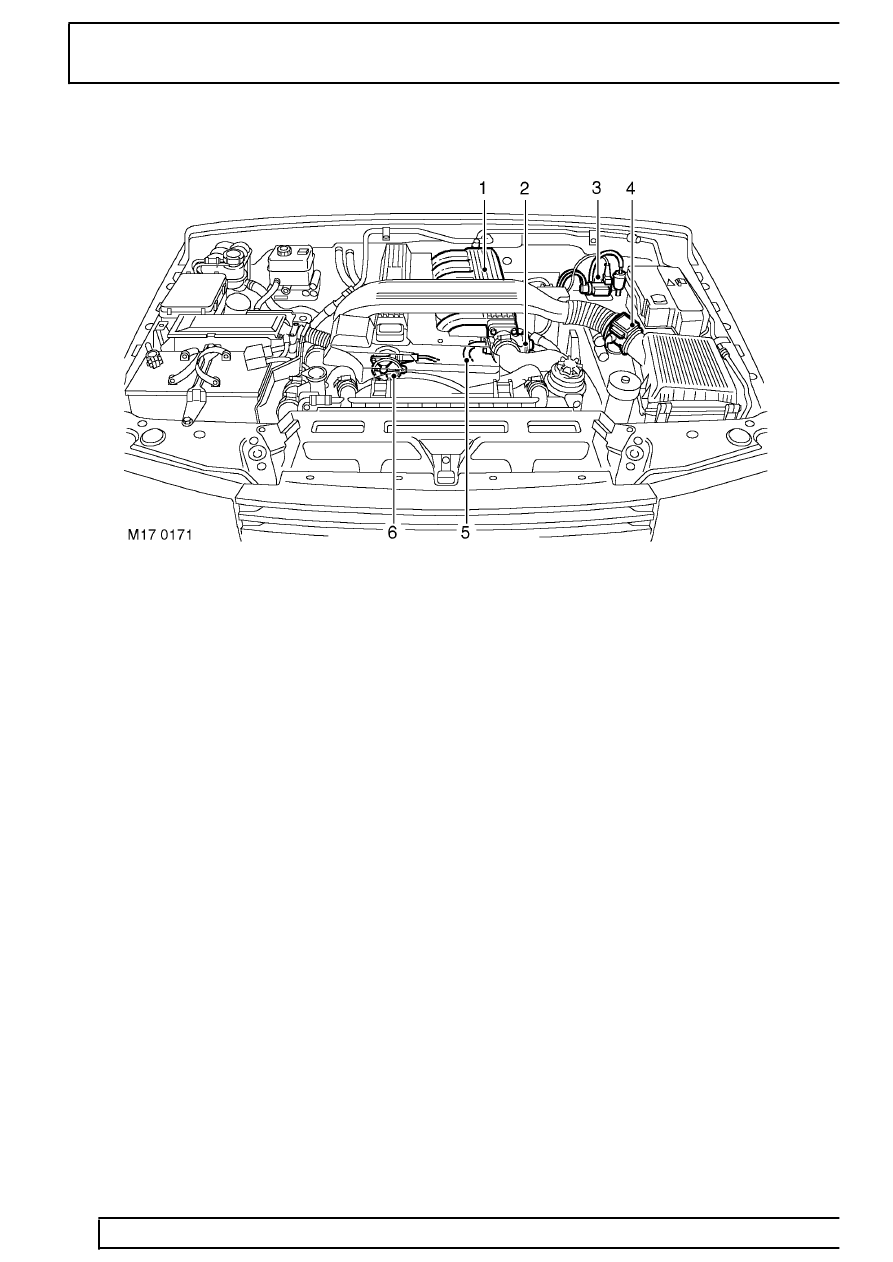
Component location
1. Intake Manifold
2. EGR Valve
3. EGR Modulator Valve
4. Mass Air Flow (MAF) Sensor
5. Pipe - Exhaust Manifold to EGR Valve
6. Vacuum Pump - EGR System
During certain running conditions, the EGR system
directs exhaust gases into the intake manifold to be
used in the combustion process. The principal affect
of this is to reduce combustion temperatures by
reducing the amount of oxygen fed into the
combustion chamber, which in turn reduces Oxides of
Nitrogen (NO
X
) emissions. Up to 50% of the intake air
can be replaced by exhaust gas.
Recirculating too much exhaust gas can result in
higher emissions of soot, HC and CO due to
insufficient air. The precise quantity of recirculated
gas is controlled by the ECM to ensure that optimum
conditions are maintained.
The ECM controls an EGR modulator valve mounted
on the LH inner wing. This valve, when modulated,
opens an EGR valve on the inlet manifold and directs
exhaust gases into the inlet manifold. The EGR
modulator valve controls the supply of vacuum from a
vacuum pump located at the front of the cylinder
head.
Exhaust gases are fed from a metal pipe on the
exhaust manifold to the EGR valve on the inlet
manifold. The pipe is secured at each end by a
flanged connection secured by two bolts.
In operation, the ECM monitors engine conditions and
signals the EGR modulator to supply a vacuum to the
EGR valve.
Parts & tools for this job Staging For Land Rover Range Rover
- PARTGlow plugsSearch: Land Rover Range Rover glow plugs
- TOOLGlow plug socketSearch: glow plug socket
- TOOLDiesel compression testerSearch: diesel compression tester
Links open Amazon search results in a new tab. As an Amazon Associate I earn from qualifying purchases.