
Introduction - ENGINE CRANKCASE
- Make
- Fiat
- Model
- Doblò Factory Service Manual
- Year
- 2000–2010
- Section
- Engine crankcase › Introduction - ENGINE CRANKCASE
Introduction - ENGINE CRANKCASE
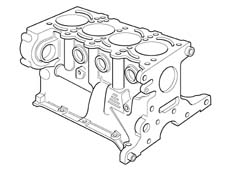
The engine block is spheroidal graphite cast iron, with high mechanical strength.
The crankshaft is supported by means of five main bearings.
The cylinders are formed directly in the engine block, and are graded into three sizes plus one oversize.
There are special channels in the engine block walls which allow the flow of coolant and lubricating oil.
Oil jets cool the pistons.
The diagram below illustrates the oil jets for cooling the pistons.
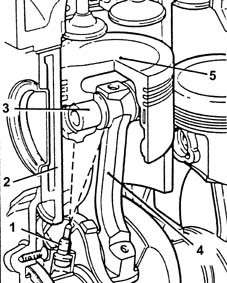
1, Oil jet
2, Piston bore/liner
3, Connecting rod-piston gudgeon pin
4, Connecting rod
5, Piston
Operation
There are four oil jets (1) for cooling the piston crown located in the lower part of the cylinder liner/bore (2). The oil jet is directed so that it partly lubricates the machined housing of the connecting rod and piston gudgeon pin.
The jets incorporate a ball valve which opens at a pressure of about 1.1 bar.
Components
Oil jets for cooling the pistons.
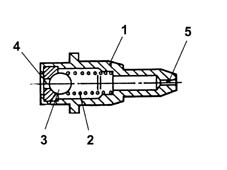
1, Jet body
2, Spring
3, Valve
4, Oil inlet duct
5, Oil outlet duct
The engine block is spheroidal graphite cast iron, with high mechanical strength.
The crankshaft is supported by means of five main bearings.
The cylinders are formed directly in the engine block, and are graded into three sizes plus one oversize.
There are special channels in the engine block walls which allow the flow of coolant and lubricating oil.
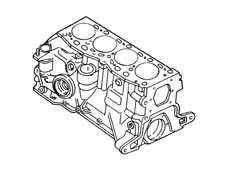
The crankcase is in ductile cast iron
The cylinders are formed directly in the engine block, and are graded into three sizes plus one oversize.
The crankshaft is supported by five main bearings (1).
There are special channels in the engine block walls which allow the flow of coolant and lubricating oil.
At the bottom of each cylinder, there is a jet (2) from which oil is sprayed onto the piston crown to cool it and ensure the lubrication of the gudgeon pin.
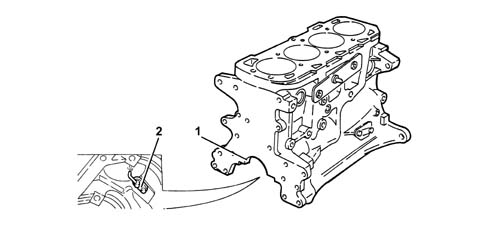
LOWER CRANKCASE
The lower crankcase is made out of pressure cast aluminium alloy, with cast iron main bearing caps.
The mounts and main bearing caps are machined together with the upper crankcase.
The lower crankcase is fitted to the upper crankcase by means of bolts and locating dowels to ensure greater precision.
A strip of sealant is applied between both crankcases to prevent engine oil leaks.
The figure below shows the upper crankcase (1) and the lower crankcase (2).
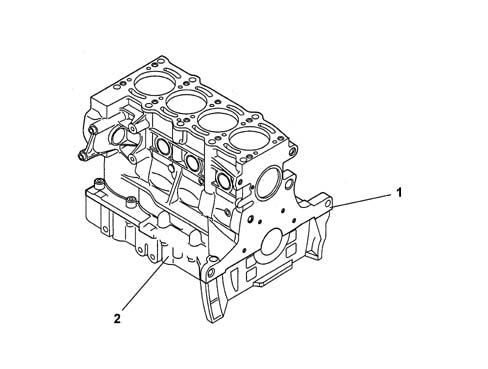
The cylinder block/crankcase is made from cast iron with closed-deck type cylinder liners/bores.
The crankshaft is supported by five main bearings.
There are special channels in the engine block walls which allow the flow of coolant and lubricating oil.
Oil jets cool the pistons.
The diagram below illustrates the oil jets for cooling the pistons.
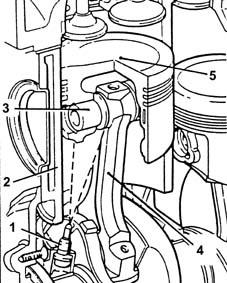
1, Oil jet
2, Piston bore/liner
3, Connecting rod-piston gudgeon pin
4, Connecting rod
5, Piston
Operation
There are four oil jets (1) for cooling the piston crown located in the lower part of the cylinder liner/bore (2). The oil jet is directed so that it partly lubricates the machined housing of the connecting rod and piston gudgeon pin.
The jets incorporate a ball valve which opens at a pressure of about 1.1 bar.
Components
Oil jets for cooling the pistons.
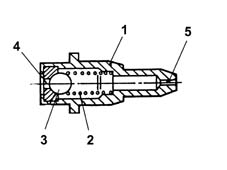
1, Jet body
2, Spring
3, Valve
4, Oil inlet duct
5, Oil outlet duct
Components
There are four jets (1) in the lower part of the cylinder liners/bores from which oil is sprayed; the jet is directed in such a way that it cools the piston crown and lubricates the gudgeon pin machined housing.
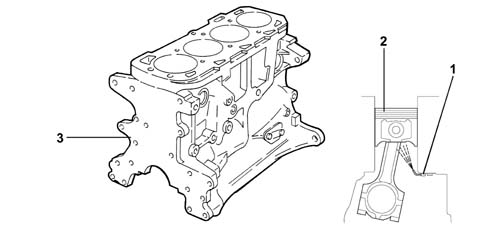
1, Jet
2, Piston
3, Cylinder block/crankcase
The cylinder block/crankcase is made from cast iron with closed-deck type cylinder liners/bores.
The crankshaft is supported by five main bearings.
There are special channels in the engine block walls which allow the flow of coolant and lubricating oil.
There is a jet in the lower section which sprays oil to cool the piston skirt and lubricate the gudgeon pin.
OIL JETS FOR COOLING THE PISTONS
There are four jets (1) in the lower part of the cylinder liners/bores from which oil is sprayed; the jet is directed in such a way that it cools the piston crown and lubricates the gudgeon pin machined housing.
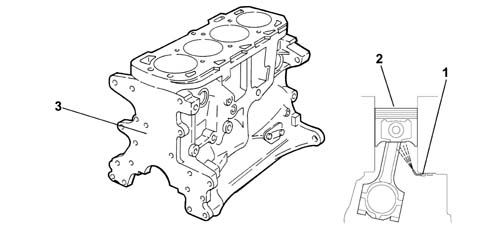
1, Jet
2, Piston
3, Cylinder block/crankcase
CONSTRUCTION SPECIFICATIONS
The crankcase is made of of high mechanical strength cast iron.
The crankshaft is supported by five main bearings.
The cylinders are formed directly in the crankcase and sorted into three size categories plus one oversize.
Special channels in the crankcase walls carry coolant and lubrication fluid.
Parts & tools for this job Staging For 2000 Fiat Doblò
- PARTEngine gasket setSearch: Fiat Doblò 2000 engine gasket set
- TOOLTorque wrenchSearch: 3/8 inch torque wrench
- TOOLFeeler gauge setSearch: feeler gauge set
Links open Amazon search results in a new tab. As an Amazon Associate I earn from qualifying purchases.