
Introduction - CYLINDER HEAD/S
- Make
- Lancia
- Model
- Ypsilon Factory Service Manual
- Year
- 2003–2011
- Section
- Cylinder head/s › Introduction - CYLINDER HEAD/S
Introduction - CYLINDER HEAD/S
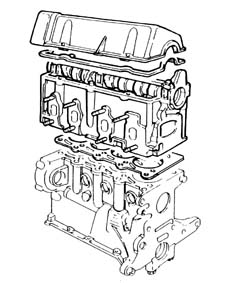
The cylinder head is the monolithic type made from aluminium alloy. The two valves per cylinder are mounted in their respective guides, operated by a camshaft via mechanical tappets and adjustment shims.
The valve guides are installed by interference fit in their seats in the cylinder head.
The inner diameter is finished off after assembly, using a specific reamer.
The cylinder head gasket is of the Aramide fibre type, and there is no need to retighten the cylinder head at all during the life of the engine.
The cylinder head is the monolithic type made from aluminium alloy.
The four valves per cylinder are mounted in their respective guides, operated by two camshafts via hydraulic tappets.
The valve guides are installed by interference fit in their seats in the cylinder head.
The inner diameter is finished off after assembly, using a specific reamer.
The camshafts are fitted in two integral camshaft housings, without a tappet cover.
The cylinder head gasket is the two layer metal type 0.5 mm thick and there is no need to retighten the cylinder head at all during the life of the engine.
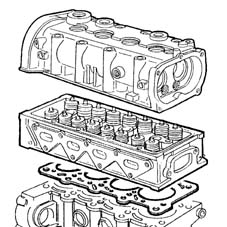
The cylinder head is the monolithic type made from aluminium alloy.
The four valves per cylinder are mounted in their respective guides, operated by two camshafts via hydraulic tappets.
The valve guides are installed by interference fit in their seats in the cylinder head.
The inner diameter is finished off after assembly, using a specific reamer.
The camshafts are fitted in two integral camshaft housings, without a tappet cover.
The cylinder head gasket is the two layer metal type 0.5 mm thick and there is no need to retighten the cylinder head at all during the life of the engine.
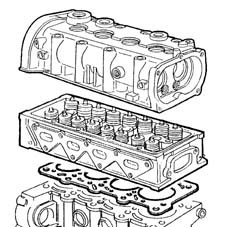
The following elements make up the cylinder head:
- camshaft
- camshaft bearings
- tappets
- lubrication pipe
- inlet and exhaust valves
- valve guides
- valve seats
- tappet cover
- studs for fixing exhaust and inlet manifolds
The cylinder head contains: the intake manifolds (with Venturi pipe shaped profile) (1); the exhaust manifolds; the valve openings; the coolant flow openings; the lubricant flow openings; the spark plug threaded openings; the openings for fastening to the engine block and the combustion chambers.
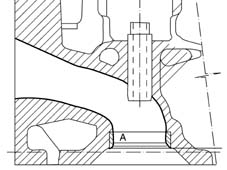
The head is the component which closes the cylinder; it contains the combustion chambers, where the air-fuel mixture is compressed and ignited; very high temperatures are reached here (average values 2300 °C approx). For this reason aluminium alloys are used in the construction of cylinder heads as they are light, resistant to compression and have high termal conductivity properties.
The use of this material makes it possible to increase the compression ratio, moving away from the detonation point, because the heat is dissipated more rapidly away from the hot spots.
Parts & tools for this job Staging For 2003 Lancia Ypsilon
- PARTEngine gasket setSearch: Lancia Ypsilon 2003 engine gasket set
- TOOLTorque wrenchSearch: 3/8 inch torque wrench
- TOOLFeeler gauge setSearch: feeler gauge set
Links open Amazon search results in a new tab. As an Amazon Associate I earn from qualifying purchases.