
Cataylzer
- Make
- Fiat
- Model
- Ulysse Factory Service Manual
- Year
- 2002–2010
- Section
- Emission control system › Cataylzer
CATAYLZER
The catalytic converter is a post-treatment device for reducing the carbon monoxide (CO) and unburnt hydrocarbons (HC), transforming them into carbon dioxide (CO2) and water vapour (H20).
SPECIFICATIONS
The catalytic converter comprises a stainless steel casing (1), thermal insulation (2) and a ceramic structure with a honeycomb structure (3) and cells impregnated with platinum which is a catalyzing substance for the oxidation reactions.
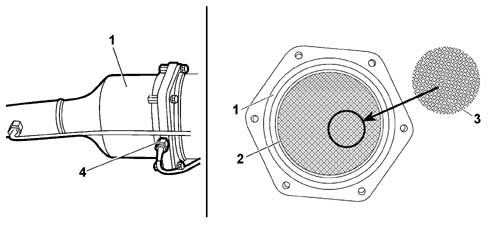
1, stainless steel outer casing
2, thermal insulation
3, honeycomb ceramic structure
4, temperature sensor
OPERATION
The chemical transformation inside the catalytic converter increases during the post-injection stage with the combustion of unburnt hydrocarbons (HC), this post-combustion which increases the temperature of the exhaust gases (catalytic combustion) is controlled by the temperature sensors upstream and downstream of the catalytic converter.
An initial series of post-injections gradually increases the catalyzation process until the maximum conversion level is reached (around 98% starting at 130°/150°C). Beyond this level, a further increase in the temperature of the exhaust gases causes the virtual total destruction of the hydrocarbons.
it is possible that (non harmful) white fumes may be produced during acceleration following the prolonged use of the vehicle at low speeds; these fumes are produced inside the catalytic converter (when the temperature of the latter goes from being cold to being very hot) through the chemical of the hydrocarbons, water vapour and nitrogen oxide.
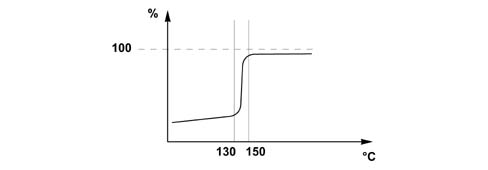
% = conversion percentage
TEMPERATURE SENSOR UPSTREAM OF THE CATALYZER
The temperature sensor allows the engine management node to determine the temperature of the exhaust gases straight after they come out of the turbocharger upstream of the catalytic converter.
The sensor is the NTC type (negative temperature coefficient): as the temperature increases, the resistance value decreases.
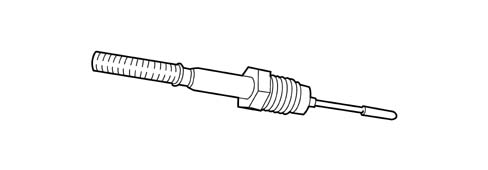
The table below contains the resistance values dependent on the temperature
| Temperature °C | Resistance k Ohm |
|---|---|
| 100 | 96.0 |
| 150 | 32.0 |
| 200 | 13.5 |
| 250 | 6.30 |
| 300 | 3.30 |
| 350 | 1.85 |
| 400 | 1.15 |
| 450 | 0.755 |
| 500 | 0,514 |
| 550 | 0.362 |
| 600 | 0.268 |
| 650 | 0.198 |
| 700 | 0.151 |
TEMPERATURE SENSOR DOWNSTREAM OF THE CATALYZER
This sensor allows the engine management node to monitor the temperature of the exhaust gases downstream of the catalytic converter and, as a result, the increase in temperature caused by the catalytic combustion. This sensor is located between the catalytic converter and the anti-particle filter and is the same type as the sensor located upstream of the catalytic converter.
The catalytic converter is a post-treatment device for reducing the carbon monoxide (CO) and unburnt hydrocarbons (HC), transforming them into carbon dioxide (CO2) and water vapour (H20).
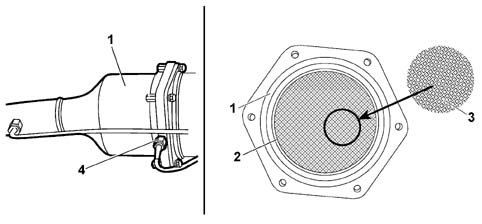
1, stainless steel outer casing
2, thermal insulation
3, honeycomb ceramic structure
4, temperature sensor
OPERATION
The chemical transformation inside the catalytic converter increases during the post-injection stage with the combustion of unburnt hydrocarbons (HC), this post-combustion which increases the temperature of the exhaust gases (catalytic combustion) is controlled by the temperature sensors upstream and downstream of the catalytic converter.
An initial series of post-injections gradually increases the catalyzation process until the maximum conversion level is reached (around 98% starting at 130°/150°C). Beyond this level, a further increase in the temperature of the exhaust gases causes the virtual total destruction of the hydrocarbons.
it is possible that (non harmful) white fumes may be produced during acceleration following the prolonged use of the vehicle at low speeds; these fumes are produced inside the catalytic converter (when the temperature of the latter goes from being cold to being very hot) through the chemical of the hydrocarbons, water vapour and nitrogen oxide.
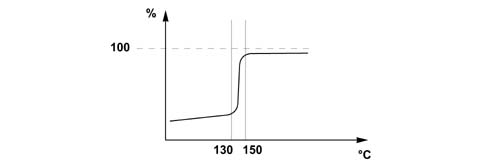
% = conversion percentage
TEMPERATURE SENSOR UPSTREAM OF THE CATALYZER
The temperature sensor allows the engine management node to determine the temperature of the exhaust gases straight after they come out of the turbocharger upstream of the catalytic converter.
The sensor is the NTC type (negative temperature coefficient): as the temperature increases, the resistance value decreases.
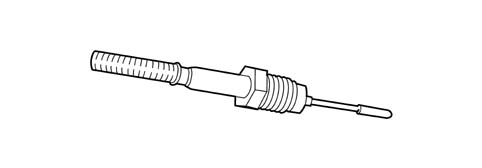
The table below contains the resistance values dependent on the temperature
| Temperature °C | Resistance k Ohm |
|---|---|
| 100 | 96.0 |
| 150 | 32.0 |
| 200 | 13.5 |
| 250 | 6.30 |
| 300 | 3.30 |
| 350 | 1.85 |
| 400 | 1.15 |
| 450 | 0.755 |
| 500 | 0,514 |
| 550 | 0.362 |
| 600 | 0.268 |
| 650 | 0.198 |
| 700 | 0.151 |
TEMPERATURE SENSOR DOWNSTREAM OF THE CATALYZER
This sensor allows the engine management node to monitor the temperature of the exhaust gases downstream of the catalytic converter and, as a result, the increase in temperature caused by the catalytic combustion. This sensor is located between the catalytic converter and the anti-particle filter and is the same type as the sensor located upstream of the catalytic converter.
Parts & tools for this job Staging For 2002 Fiat Ulysse
- PARTExhaust gasketSearch: Fiat Ulysse 2002 exhaust gasket
- TOOLPenetrating oilSearch: penetrating oil
- TOOLOBD2 scannerSearch: OBD2 scanner
Links open Amazon search results in a new tab. As an Amazon Associate I earn from qualifying purchases.