
Evaporation control system
- Make
- Alfa Romeo
- Model
- GT Factory Service Manual
- Year
- 2003–2010
- Section
- Exhaust emission control system › Evaporation control system
EVAPORATION CONTROL SYSTEM
Operation
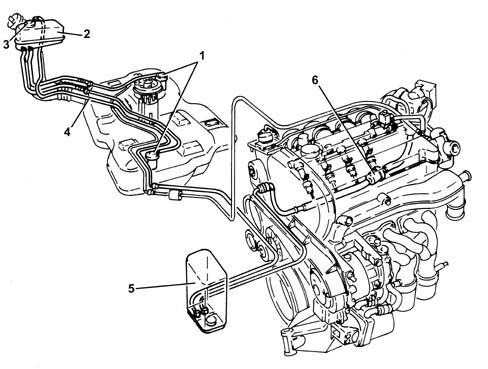
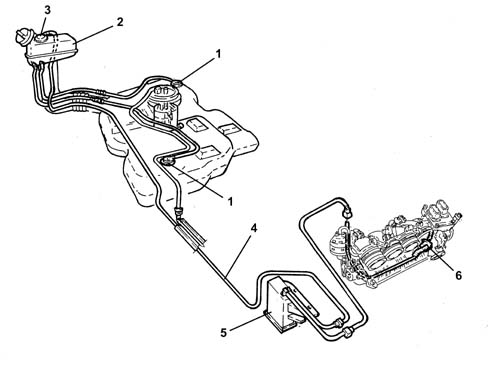
Vapours from the fuel tank flow through two float valves (1) to separator (2).
The vapours condense in the separator and drop into the tank.
Uncondensed vapours are sent to canister (5) through the multifunction valve (3) and a special pipe (4) where they are absorbed by and stored in the active carbon inside.
The vapours flow on to the intake manifold through the solenoid (6) controlled by the injection control unit.
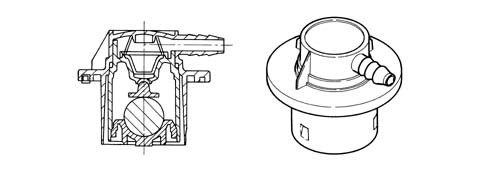
Multifunction valves
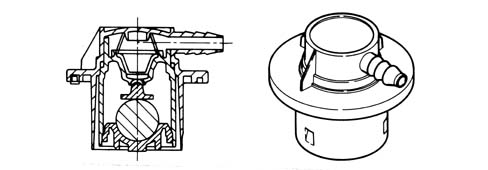
Functions of the multifunction valve are as follows:
- tank pressurisation;
- tank ventilation;
- retention;
- seal in the case of roll-over.
The multifunction valve can be dismantled from the separator and a Viton seal ensures a perfect seal.
Tank pressurization
Tank pressure is maintained at 30 - 45 bar using a fluorosilicon rubber valve resting on a sealing edge.
The valve is supported by a stainless steel plate and held in place by a spring.
When tank pressure exceeds a set level, it overcomes spring resistance and allows the valve to rise so that fuel can flow out toward the canister.
The valve re-closes when the pressure returns to within specified limits.
Retainer
Under specific vehicle operating conditions, a vacuum develops in the tank due to:
- thermal changes;
- fuel consumption.
In this case, the valve''s function is to restore pressure in the tank by admitting air.
A fault in this function may lead to juddering or stalling because not enough fuel can reach the pump.
This function is carried out by the special valve located in the multifunction valve.
Seal in the case of roll over
The roll-over function prevents fuel emerging from the tank if the vehicle rolls over or tilts too far to one side.
During normal vehicle operation (cornering, acceleration, braking etc.), the fuel may slop over into the canister.
The high rollover sensitivity prevents this slop-over from occurring.
The roll-over closure angle is 33°.
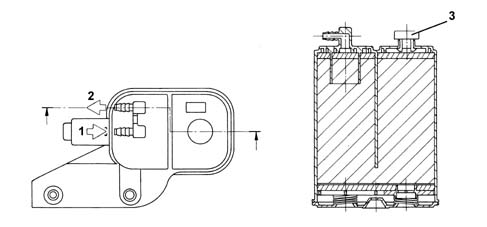
Canister
This is fitted to the right front wheel arch and consists of an activated carbon filter element that absorbs fuel vapours from the separator.
An opening in the canister allows the intake of air and is like a labyrinth to prevent the intake of water.
the fuel vapour inlet and outlet pipes are thermowelded onto the canister and cannot therefore be dismantled.
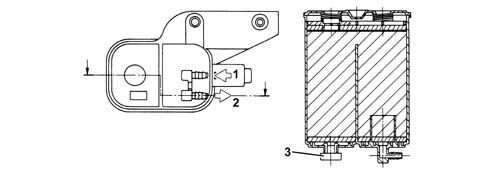
1 - From the multifunction valve
2 - To the solenoid
3 - Labyrinth opening
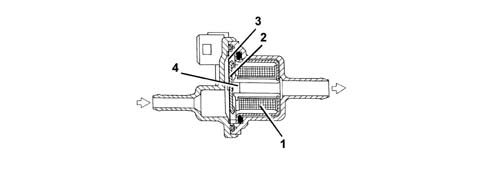
Fuel vapour solenoid valve
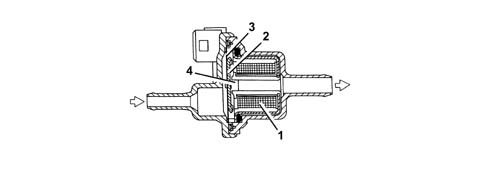
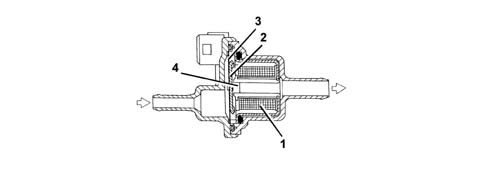
This is fitted on the lower part of the air chamber and is controlled by the injection control unit.
The solenoid allows fuel vapours stored in the canister to flow through to the engine intake.
If deactivated, the solenoid remains in open position. At key-ON, it closes ready for operation.
Electromagnet (1) is excited and attracts plunger (2) that overcomes the load of spring pack (3) to close orifice (4) and prevent fuel vapours from passing through.
OPERATION
Vapours from the fuel tank flow through two float valves (1) to the separator (2).
The vapours condense in the separator and drop into the tank.
Multifunction valves
The functions of the multifunction valves are as follows:
- tank pressurisation
- tank ventilation
- retention
- seal in the case of roll-over.
TANK PRESSURIZATION
When tank pressure exceeds a set level, it overcomes spring resistance and allows the valve to rise so that fuel can flow out toward the canister.
The valve re-closes when the pressure returns to within specified limits.
RETENTION
Under specific vehicle operating conditions, a vacuum develops in the tank due to:
- thermal changes
- fuel consumption.
In this case, the valve''s function is to restore pressure in the tank by admitting air.
A fault in this function may lead to juddering or stalling because not enough fuel can reach the pump.
SEAL IN THE CASE OF ROLL OVER
The roll-over function prevents fuel emerging from the tank if the vehicle rolls over or tilts too far to one side.
During normal vehicle operation (cornering, acceleration, braking etc.), the fuel may slop over into the canister.
The high roll over sensitivity prevents this slopping; the roll over closing angle is less than 33°.
Canister
This is fitted to the right front wheel arch and consists of an activated carbon filter element that absorbs fuel vapours from the separator.
A one-way valve admits outside air (flushing air) during vapour intake.
Fuel vapour solenoid valve
This is fitted on the lower part of the modular intake manifold and is controlled by the injection control unit.
The solenoid allows fuel vapours stored in the canister to flow through to the engine intake.
If deactivated, the solenoid remains in open position. At key-ON, it closes ready for operation.
Electromagnet (1) is excited and attracts plunger (2) that overcomes the load of spring pack (3) to close orifice (4) and prevent fuel vapours from passing through.
SAFETY AND VENTILATION VALVE
Operation
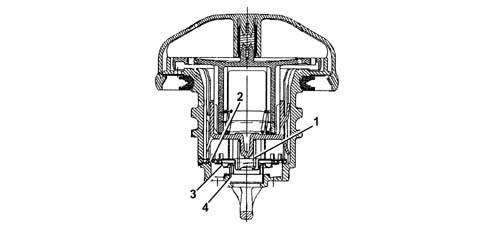
This valve is built into the fuel filler cap and performs as follows, depending on fuel pressure in the tank.
Excess pressure in tank
When tank pressure exceeds the specified value, it acts on plate (2) and overcomes the load on spring (1) so that excess vapours can be vented outside.
Vacuum in reservoir
When excess pressure builds up in the tank due to fuel consumption, this overcomes the load on spring (4) and moves valve (3) to admit air.
Operation
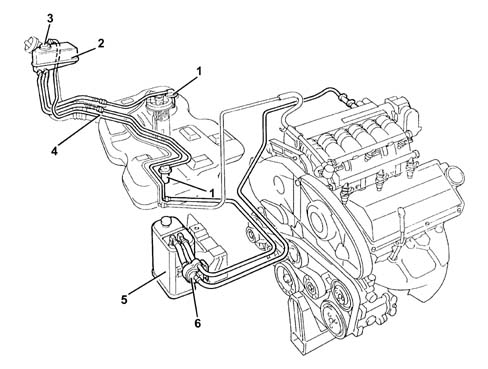
Vapours from the fuel tank flow through two float valves (1) to separator (2).
The vapours condense in the separator and drop into the tank.
Uncondensed vapours are sent to canister (5) through the multifunction valve (3) and a special pipe (4) where they are absorbed by and stored in the active carbon inside.
The vapours flow on to the intake manifold through the solenoid (6) controlled by the injection control unit.
Multifunction valves
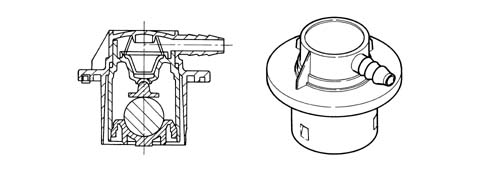
Multifunction valve functions are as follows:
- tank pressurisation;
- tank ventilation;
- retention;
- seal in the case of roll-over.
The multifunction valve can be dismantled from the separator and a Viton seal ensures a perfect seal.
Tank pressurization
Tank pressure is maintained at 30 - 45 bar using a fluorosilicon rubber valve resting on a sealing edge.
The valve is supported by a stainless steel plate and held in place by a spring.
When tank pressure exceeds a set level, it overcomes spring resistance and allows the valve to rise so that fuel can flow out toward the canister.
The valve re-closes when the pressure returns to within specified limits.
Retainer
Under specific vehicle operating conditions, a vacuum develops in the tank due to:
- thermal changes;
- fuel consumption.
In this case, the valve''s function is to restore pressure in the tank by admitting air.
A fault in this function may lead to juddering or stalling because not enough fuel can reach the pump.
This function is carried out by the special valve located in the multifunction valve.
Seal in the case of roll over
The roll-over function prevents fuel emerging from the tank if the vehicle rolls over or tilts too far to one side.
During normal vehicle operation (cornering, acceleration, braking etc.), the fuel may slop over into the canister.
The high rollover sensitivity prevents this slop-over from occurring.
The roll-over closure angle is 33°.
SAFETY AND VENTILATION VALVE
Operation
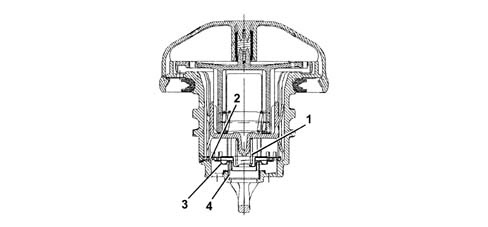
This valve is built into the fuel filler cap and performs as follows, depending on fuel pressure in the tank.
Excess pressure in tank
When tank pressure exceeds the specified value, it acts on plate (2) and overcomes the load on spring (1) so that excess vapours can be vented outside.
Vacuum in reservoir
When excess pressure builds up in the tank due to fuel consumption, this overcomes the load on spring (4) and moves valve (3) to admit air.
Canister
This is fitted to the right front wheel arch and consists of an activated carbon filter element that absorbs fuel vapours from the separator.
An opening in the canister allows the intake of air and is like a labyrinth to prevent the intake of water.
the fuel vapour inlet and outlet pipes are thermowelded onto the canister and cannot therefore be dismantled.
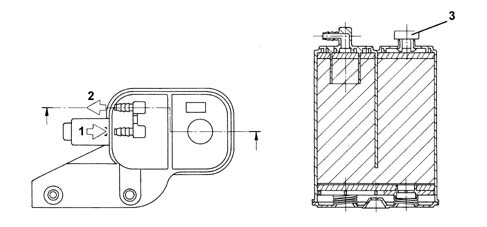
1 - From the multifunction valve
2 - To the solenoid
3 - Labyrinth opening
Fuel vapour solenoid valve
It is fitted on the canister mounting bracket and operated by the injection control unit.
The solenoid allows fuel vapours stored in the canister to flow through to the engine intake.
If deactivated, the solenoid remains in open position. At key-ON, it closes ready for operation.
Electromagnet (1) is excited and attracts plunger (2) that overcomes the load of spring pack (3) to close orifice (4) and prevent fuel vapours from passing through.
Parts & tools for this job Staging For 2003 Alfa Romeo GT
- PARTExhaust gasketSearch: Alfa Romeo GT 2003 exhaust gasket
- TOOLPenetrating oilSearch: penetrating oil
- TOOLOBD2 scannerSearch: OBD2 scanner
Links open Amazon search results in a new tab. As an Amazon Associate I earn from qualifying purchases.